7 Mistakes to Avoid When Hiring a Desentupidora Grajaú
The most common mistake people make when they first need a desentupidora Grajaú is calling the first number they find and accepting the first price quoted over the phone, without asking what that price actually covers. The second most common mistake is thinking a clogged drain is always a simple blockage that a plunger or a bottle of chemicals can fix. In practice, a blocked sewer line in a dense neighborhood like Grajaú usually has a cause that needs to be identified before anything is unclogged.
This is a practical walkthrough for someone dealing with this for the first time. It is written the way a community moderator would answer the same questions that come up in neighborhood groups week after week: what to check, what to ask, what to avoid, and how to tell a serious service from a risky one.
1. Hiring Without Confirming the Company Actually Serves Grajaú
Grajaú is a large district in the south of São Paulo, with very different conditions from one street to the next: narrow alleys, older homes with remodeled plumbing, condominiums with shared vertical stacks, and commercial frontages on busy avenues. A company that advertises across the whole city may not know the local layout, may take hours to arrive, and may charge a travel fee that was never mentioned.
Before booking, confirm three things: that the team covers Grajaú specifically, that there is a real local dispatch, and that the arrival window is realistic. A serious provider will state the neighborhood coverage clearly and will not promise an arrival time it cannot keep.
What to ask on the first call
- Do you have a team that attends Grajaú today, and what is the average arrival time?
- Is there a call-out fee separate from the service fee?
- Do you work with both residential and condominium buildings in the area?
If the person on the phone hesitates on any of these, that is a signal. A desentupidora Grajaú São Paulo SP that actually operates in the district can answer these questions in seconds.
2. Treating Every Clog as If It Were the Same Clog
A slow kitchen sink, a backed-up toilet, a floor drain that gurgles when the washing machine runs, and a sewer smell in the garage are four different problems. They may share a cause, but they often do not. The mistake is to describe the symptom as “a clog” and accept a generic fix.
A proper diagnosis separates the drain from the branch line and the branch line from the main sewer. A kitchen drain is usually blocked by grease and food residue. A bathroom drain is more often blocked by hair and soap. A floor drain that backs up when another fixture is used points to a problem further down the line, not at the drain itself.
Why the distinction matters for cost
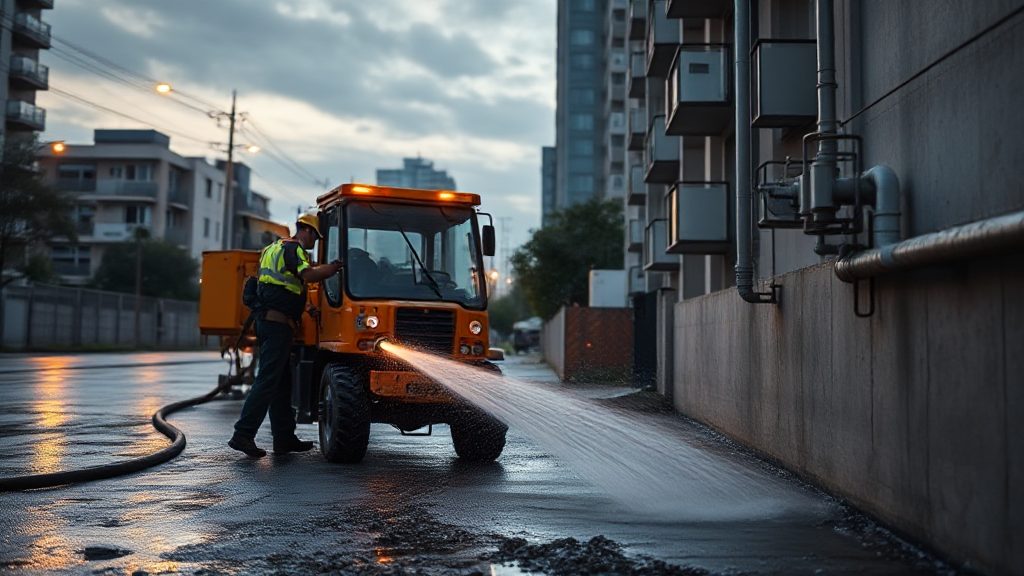
Clearing a single fixture is a short job. Clearing a branch line may require a machine with a cable. Clearing the main line may require hydrojetting, which uses high-pressure water to remove grease, roots, and scale from the pipe walls. Each of these has a different price and a different risk of recurrence. If the technician never asks which fixtures are affected, the diagnosis is probably incomplete.
3. Skipping the Questions That Reveal Whether the Price Is Real
A price quoted without a visit is an estimate, not a price. The real number depends on access, pipe diameter, the distance to the blockage, and whether the line needs hydrojetting or only mechanical clearing. The mistake is to treat the phone quote as final and then be surprised by a larger bill.
Ask what is included: labor, equipment, the visit itself, and any follow-up if the blockage returns within a short period. Ask whether the price changes if the blockage is in the main line instead of a fixture. Ask for the payment method and whether there is a written service order.
Red flags in the conversation
- A price given without any question about the type of blockage.
- Pressure to approve the service before the technician arrives.
- No mention of a service order or receipt.
- Willingness to “fix it first and discuss the price later.”
A written service order protects both sides and is standard practice for a professional emergency plumbing provider.
4. Using Chemical Products Before Understanding the Cause
This is the mistake that turns a manageable clog into a bigger repair. Chemical drain cleaners work by generating heat and attacking organic material, but they do not remove grease buildup, roots, or collapsed pipe sections. In older homes in Grajaú, where pipes may already be thin or corroded, repeated chemical use can weaken the walls and lead to leaks.
There is also a safety issue. If a technician later needs to open the line, residual chemicals can splash. If the line is completely blocked, the chemical sits in the pipe and does nothing except corrode it.
What to do instead
Use a plunger or a drain snake for a single fixture. If the water does not clear after one attempt, stop and call a professional. For floor drains and sewer lines, do not use chemicals at all. The correct tool for a main line is mechanical or hydrojetting equipment, not a bottle from the supermarket.
5. Ignoring the Warning Signs That Point to a Sewer Line Problem
Many first-time callers describe a single slow drain and are surprised when the technician says the main line is partially blocked. The signs were there: gurgling sounds from other drains, a sewer smell in the yard or garage, water backing up in the shower when the toilet is flushed, or a patch of unusually green grass above the line.
These signs mean the problem is downstream of the fixture. Clearing only the fixture will give a few days of relief and then the backup returns. When you call, describe all the symptoms, not just the one that is most visible.
Condominiums and shared lines
In buildings, a blockage in a shared stack affects several units. The building manager should be involved from the start, because the fix may require access to a common area or a unit that is not yours. A desentupidora em Grajaú São Paulo SP that works with condominiums will know how to coordinate this and will document the service for the building records.
6. Choosing the Cheapest Quote Without Checking What Happens After
The cheapest quote is often the one with the least follow-up. The job is done, the water drains, and then two weeks later the same line backs up. A serious service includes a short warranty on the clearing, a report of what was found, and a recommendation for prevention if the cause was grease, roots, or a structural issue.
Compare quotes on three points: what is included, how long the warranty lasts, and whether the company will return if the same blockage recurs within that period. A slightly higher price with a clear warranty is usually cheaper than two visits from the lowest bidder.
Prevention is part of the service
Ask what caused the blockage. If it was grease, the answer is a change in how the kitchen drain is used. If it was roots, the answer may be a periodic hydrojetting schedule. If it was a collapsed section, the answer is a repair, not another clearing. A provider that explains this is treating the cause, not just the symptom.
7. Waiting Too Long and Letting a Small Blockage Become an Emergency
A slow drain is a warning. A backed-up drain is a problem. A sewer overflow into the home is an emergency that costs far more to fix and creates a health risk. The mistake is to wait until the weekend, until the holiday, or until the water reaches the floor.
Emergency service exists for exactly this reason, and it is available at night and on weekends. Calling when the drain is slow, rather than when it has stopped, usually means a shorter job, a lower cost, and no water damage to floors, cabinets, or walls.
A simple checklist before you call
- Note which fixtures are affected and whether the backup happens when another fixture is used.
- Check for a sewer smell near floor drains, the yard, or the garage.
- Stop using water in the affected area to avoid overflow.
- Confirm the company covers Grajaú and ask for the arrival window.
- Ask what the price includes and whether there is a service order.
- Describe all symptoms, not just the most visible one.
Following this sequence turns a stressful first experience into a predictable one. The goal is not to become an expert in plumbing; it is to ask the right questions so the job is done once, correctly, and with a clear record of what was done.
What a Good First Experience Looks Like
A good experience starts with a phone call where the person on the other end asks questions instead of quoting a number. It continues with a technician who identifies the type of blockage before starting, explains what will be done, and gives a written service order. It ends with a clear explanation of the cause and a recommendation for prevention.
In a district as varied as Grajaú, that level of care is what separates a service that solves the problem from one that only postpones it. The seven mistakes above are the ones that come up most often in neighborhood conversations, and each one is avoidable with a few direct questions before the team arrives.